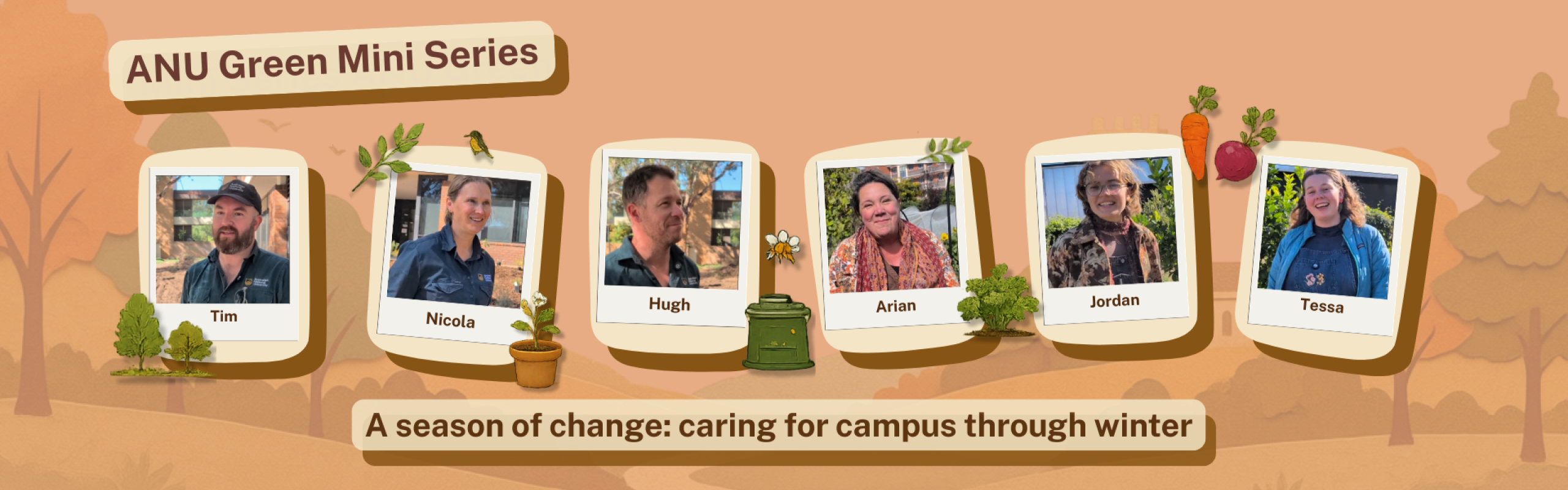
As the weather cools and leaves begin to fall, a different kind of work beings across University landscapes and gardens. Across campus, the Landscape and Conservation and Kitchen Garden teams prepare green spaces for autumn and winter through planting, composting, soil care and biodiversity-focused garden management.
Over the past few weeks, A season of Change has taken the ANU community behind the scenes of this work through a mini-series on Instagram. From campus landscapes and the ANU Soil Yard to the Kitchen Garden and practical gardening tips, the series has explored how ANU green spaces are cared for through the cooler months an dhow these practices can be applied at home.
While the seasons may appear quieter above ground, autumn and winter are critical for preparing landscapes and gardens for future growth. This work supports the Environmental Sustainability Plan 2026–2030 through actions that improve biodiversity, climate resilience, soil health and circular resource use across campus.
The ANU Landscape and Conservation team manages campus landscapes and ecosystems year-round through seasonal planting, mulching, biodiversity-focused garden design and green waste management. Green waste on campus is processed through the ANU Soil Yard, where leaves, bark and garden waste are transformed into compost and forest litter mulch for reuse across campus. This closed-loop system helps return nutrients back into campus soils, improves water retention and soil health, supports plant resilience and reduces waste sent to landfill. Since 2019, the Soil Yard has produced more than 2,800m³ of compost and mulch, helping improve soil health, retain moisture and reduce waste to landfill.
The ANU Kitchen Garden also shifts with the seasons, focusing on preparing beds, composting, maintaining soil health and growing crops suited to cooler conditions. The garden supports biodiversity and circular food systems while also creating opportunities for staff and students to connect with gardening, food and sustainability.
Apply these practices at home
Many of the practices used across campus can also be applied at home, whether you have a backyard garden, balcony or a few pots on your windowsill.
Simple autumn and winter gardening tips
- Add mulch to garden beds or pots to help protect soil and retain moisture
- Leave some flowering plants in your garden to support pollinators and beneficial insects through the cooler months
- Improve soil health by adding compost and organic matter to your garden beds or pots like worm castings before planting for spring
- Compost food scraps, leaves and garden clippings to return nutrients to your soil
- Grow seasonal herbs, vegetables and plants suited to the climate, even in small spaces or containers
- Use leftover vegetables herbs and scraps in soups, broths and stews to reduce food waste and make the most of seasonal produce
Watch the series
Missed an episode or want to revisit your favourites? Explore the full A Season of Change series on the ANU Green Instagram.
Browse the videos below and discover how small actions, whether on campus or at home, can help build healthier soils, support biodiversity, create more resilient green spaces and receive free produce from the Kitchen Garden.
ANU is working to reduce our environmental impact across all our emission sources including energy, travel, waste and more. Looking for other ways to help support this mission? Join the ANU Green Network. The Network is an online resource for ANU staff and students to access and share sustainability activities and advice at the University.